

Aesthetic Injectables
The Aesthetic Injectables program prepares licensed medical professionals to safely and effectively administer aesthetic injectables, including botulinum toxin and dermal fillers. With an emphasis on both theoretical knowledge and clinical practice, this program bridges the gap between traditional education and the advanced skills required in the growing field of aesthetic medicine. Students will gain an in-depth understanding of facial anatomy, pharmacology, injection techniques, consultation skills, complication management, and medical ethics. The program is delivered in a hybrid format, combining online coursework with supervised, in-person clinical experience.
7 Weeks Online | 3 Days In-Person | 14 CEUs
General Sciences - GEN101

The General Sciences covers a brief orientation and review of the global evolution of spas and treatments, as well as advanced education and employment opportunities and key terms associated with medical aesthetics. This course also aims to develop critical-thinking skills, while enhancing soft skills. Additionally, the orientation portion will include information regarding privacy laws and professional organizations and publications. The General Sciences course will include information regarding rules & regulations, privacy laws, professional organizations and publications, workplace safety, various maladies of the skin, infection control, advanced histology of the cell and the skin, the endocrine system, anatomy, and physiology of the muscles, nerves, and cardiovascular and lymphatic systems. General Sciences will also cover Chemistry and biochemistry and common skincare ingredients. (2 Credit Hours)
Skin Sciences - SKN101

The Skin Sciences course offers clear and up-to-date content considering every aspect of the skin, including skin disorders and diseases of the skin, maladies of the skin (including acne, sensitive skin, and the danger of sun exposure), skin types, the relationship between nutrition and stress, and conditions, and aging process, stressing the necessity of a comprehensive client consultation. The foundation on which most retail sales and medical prescriptions are built is covered in the skin care products’ chemistry, ingredients, and selection. Students will also learn about the FDA and the drug approval process. (1 Credit Hour)
Medical Sciences - MED101

The Medical Sciences course includes information regarding working in a medical setting, medical terminology, medical intervention, plastic surgery procedures, and an Aesthetician’s role in pre- and post-medical treatments and procedures including surgeries, botox, and filler, as well as the proper treatment of adverse reactions, safety, and accuracy of techniques. This class is geared at preparing an Aesthetician in a number of medical settings including, medspas, dermatology offices, and plastic surgery centers. (2 Credit Hours)
Aesthetic Injectables Theory - INJ101

This course introduces the foundational knowledge required to safely perform aesthetic injectable procedures using botulinum toxin and dermal fillers. Students will learn about facial anatomy, pharmacology, product science, safety principles, and patient consultation. Emphasis is placed on understanding facial structures, recognizing danger zones, and applying safety protocols before beginning hands-on training in the Aesthetic Injectables Lab. Topics include product preparation, injection techniques, complication management, and ethical considerations related to patient care and scope of practice. (2 Credit Hours)
Aesthetic Injectables Lab - INJ201
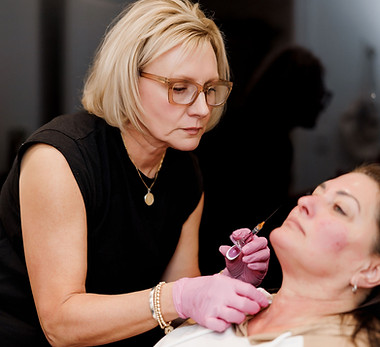
The Aesthetic Injectables Lab is a clinical, hands-on training course that complements the Foundations of Aesthetic Injectables theory course. Students will apply their theoretical knowledge through live demonstrations and supervised model treatments. This lab emphasizes facial mapping, live injections of botulinum toxin and dermal fillers, complication management, and post-care instruction. Students will be evaluated on precision, safety, professionalism, and competence in real-time clinical settings under direct supervision. (.5 Credit Hours | 40 CEUs)